31 juillet 2025
Dear readers,
In this edition, we navigate through a mix of pressing challenges and encouraging signs for agroecology and sustainability. The latest SDG report and the data from the Global Footprint Network are stark reminders that we are still far from living within the planet’s limits.
On a more mixed note, the EU’s proposals for the Common Agricultural Policy (CAP) raise both opportunities and concerns for the future of farming. Yet there is also good news: the strong mobilization around the petition against the ‘Loi Duplomb’ shows that more and more citizens are standing up for environmental protection and public health.
Last but not least, to take a step back and recharge while deepening your knowledge, we have selected a few inspiring summer reads for you!
Why over two million sign petition against the “Duplomb law”
Photo by Mirko Fabian on Unsplash
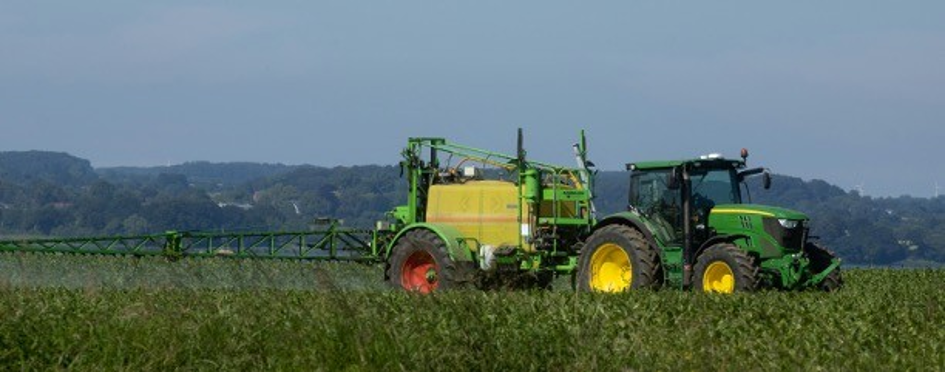
A powerful wave of citizen action is sweeping across France. More than two million people have signed a petition demanding the repeal of the controversial “Duplomb Law,” which reauthorizes the use of the pesticide acetamiprid—a chemical long criticized for its devastating impact on bees and other pollinators.
Environmental organizations, farmers, and everyday citizens have united to challenge the law, passed earlier this month, warning that it undermines biodiversity and food security at a time when pollinator populations are already collapsing. The movement has quickly gained international attention. Critics are calling on lawmakers to reverse course and instead support agroecological practices that protect pollinators and strengthen resilient farming systems.
This petition demonstrates how deeply people care about the future of biodiversity and public health. Healthy ecosystems and sustainable farming must go hand in hand—and the solutions exist. What is needed now is stronger political will, targeted financing to drive the agroecological transition, the widespread sharing of knowledge, and robust capacity building.
The government has yet to respond formally to the petition, but its rapid rise in signatures is likely to keep pressure high in the weeks ahead.
Read the full article in Le Monde.fr
Read our last edition about how AI can help spread agroecological practices.
Is EU’s CAP reform taking a regenerative turn ?
The European Union has announced updates to the Common Agricultural Policy (CAP), offering increased support for agroecological practices, including crop diversification, cover cropping, and soil health monitoring. This marks a stronger policy shift toward regenerative agriculture along with a hard cap on area-based income support and funds redistribution toward smaller, more vulnerable farms, increasing fairness in subsidy distribution.
However, under the cover of simplification, the overhaul also involves folding the CAP into a larger national funding envelope alongside regional and cohesion funds, leaving agriculture ministers to fight the battles over how to carve up a shrinking pot of money at home.
This overhaul is likely to trigger years of tense negotiations with the European Parliament and national governments over the spending of Europe’s agricultural funds.
Highlights from the SDG report
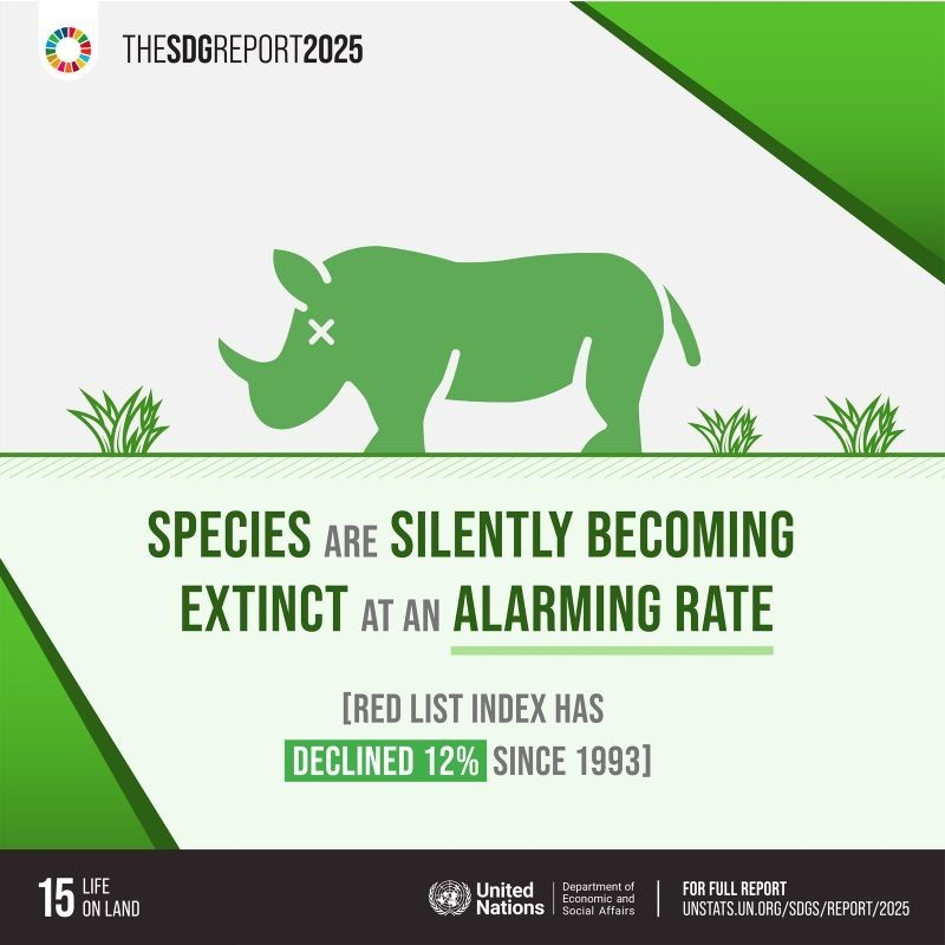
The SDG Report – that monitors global progress on the 2030 Agenda for Sustainable Development – launched too weeks ago showed that the Sustainable Development Goals have improved millions of lives over the past decade, but progress remains insufficient. The latest available data show that only 35 per cent of targets are on track or making moderate progress, while nearly half are moving too slowly and 18 per cent have regressed.
In particular, oceans and seas face mounting threats from overfishing, pollution, biodiversity loss and climate change. Global forest cover is shrinking; protection of key biodiversity areas (KBAs) has stalled recently, and species extinction is accelerating, with all major species groups are in decline on the Red List Index.
Read the full report https://lnkd.in/d-gU43dN
Humanity’s Largest Market Failure
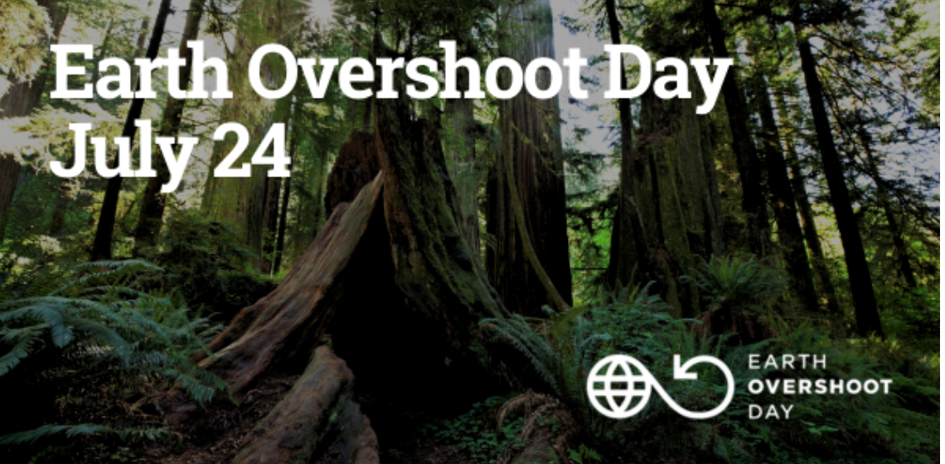
July 24th marked this year’s Earth Overshoot Day, the date when humanity’s demand on nature surpasses Earth’s capacity to replenish nature during the entire year. Calculated by Global Footprint Network, the international sustainability organization that pioneered the Ecological Footprint, this date is based on the National Footprint and Biocapacity Accounts maintained by York University.
Since global ecological overshoot began in the early 1970s, annual deficits have accumulated into a growing ecological debt. This debt now amounts to the equivalent of 22 years of the Earth’s full biological productivity. In other words, if ecological overshoot were fully reversible, it would take 22 years of the planet’s full regenerative capacity to restore the lost balance. Yet, it is unlikely that the entire ecological debt is reversible.
If overshoot continues at its current level, this debt will grow by approximately 0.8 planet-years each year. One measurable consequence of this cumulative overshoot is the rise in atmospheric CO₂ levels: since global overshoot began, concentrations have increased by 100 parts per million (ppm). In 1970, CO₂ levels stood at 47 ppm above pre-industrial levels; today, they are 147 ppm above.
Why it is earlier than last year is explained here.
The report highlights that Solutions that can #MoveTheDate of Earth Overshoot Day in the right direction are already available, and many are financially advantageous. Opportunities exist in five key areas: Cities, Energy, Food, Population, and Planet. Power of Possibility highlights scalable solutions that move Earth Overshoot Day. For example, cutting CO2 emissions from fossil fuels by 50% would #MoveTheDate by three months. For more examples, check the website.
Fed-up with grappling with the scale of today’s climate challenges? Looking for both sobering truth and imaginative hope ?
Check out those inspiring summer reads.
𝗧𝗵𝗲 𝗠𝗶𝗻𝗶𝘀𝘁𝗿𝘆 𝗳𝗼𝗿 𝘁𝗵𝗲 𝗙𝘂𝘁𝘂𝗿𝗲
“𝘐𝘵’𝘴 𝘯𝘰𝘵 𝘴𝘤𝘪𝘦𝘯𝘤𝘦 𝘧𝘪𝘤𝘵𝘪𝘰𝘯. 𝘐𝘵’𝘴 𝘫𝘶𝘴𝘵 𝘴𝘤𝘪𝘦𝘯𝘤𝘦, 𝘧𝘪𝘤𝘵𝘪𝘰𝘯𝘢𝘭𝘭𝘺 𝘥𝘳𝘢𝘮𝘢𝘵𝘪𝘻𝘦𝘥 — 𝘣𝘶𝘵 𝘯𝘰𝘵 𝘣𝘺 𝘮𝘶𝘤𝘩.”
As parts of the world have been facing record-breaking temperatures before summer even peaks, it was hard not to think of 𝗞𝗶𝗺 𝗦𝘁𝗮𝗻𝗹𝗲𝘆 𝗥𝗼𝗯𝗶𝗻𝘀𝗼𝗻’𝘀 𝗧𝗵𝗲 𝗠𝗶𝗻𝗶𝘀𝘁𝗿𝘆 𝗳𝗼𝗿 𝘁𝗵𝗲 𝗙𝘂𝘁𝘂𝗿𝗲 — a visionary novel published in 2020.
In the book’s opening chapters, a devastating heatwave kills tens of thousands of people in India. A UN-backed organization is then created to advocate for the rights of future generations and drive global climate action.Through interconnected storylines spanning politics, finance, activism, and science, the book explores how humanity might respond to escalating climate disasters — not just with policy tweaks, but with transformative systems change. From carbon quantitative easing (a brilliant idea transforming the wild west carbon markets into an effective and powerful tool) to geoengineering, climate reparations, and global governance reform, the book showcases ideas that are radical, necessary, and increasingly urgent.
It is a reminder that while the climate crisis is daunting, it is not without solutions — if we have the courage to act.

A Psalm for the Wild-Built
A “feel good” solarpunk novella
It has been centuries since the robots of Panga gained self-awareness and laid down their tools; centuries since they wandered, en masse, into the wilderness, never to be seen again; centuries since they faded into myth and urban legend.
One day, the life of a tea monk is upended by the arrival of a robot, there to honor the old promise of checking in. The robot cannot go back until the question of “what do people need?” is answered.
But the answer to that question depends on who you ask, and how. They’re going to need to ask it a lot.
In this novel written in 2021 ,Becky Chambers asks: in a world where people have what they want, does having more matter ?

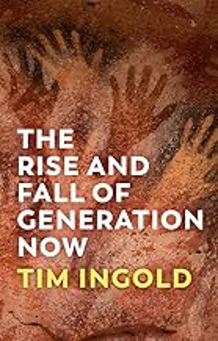
The Rise and Fall of Generation Now
“Insightful reflections on generational thinking”
Is the future about to close in, or is it open to new horizons? For anthropologist Tim Ingold, the root of our difficulty in facing up to the future lies in the way we think about generations. We imagine them as layers, succeeding one another like sheets in a stack. This view figures as a largely unquestioned backdrop to discussions of evolution, life and death, longevity, extinction, sustainability, education, climate change and other matters of contemporary concern. What if we were to think of generations, instead, as wrapping around one another along their length, more like fibres in a rope than stacked sheets? In this compelling new book, Ingold argues that a return to the idea that life is forged in the collaboration of overlapping generations might not only assuage some of our anxieties, but also offer a lasting foundation for future coexistence. But it would mean having to abandon our faith both in the inevitability of progress, and in the ability of science and technology to cushion humanity from environmental impacts. A perfect world is not around the corner, nor will our troubles ever end. Nevertheless, for as long as life continues, there is hope for generations to come.