
25 février 2026
Carbon is becoming the new border
On January 1, 2026, while global attention was focused on U.S. tariff tensions, Europe quietly crossed a historic threshold. With the operational launch of the Carbon Border Adjustment Mechanism (CBAM) — now covering agricultural fertilizers — climate performance officially became a condition for access to the EU market.
Exporting to Europe is no longer just about price or sanitary compliance. It is about carbon. And soon, carbon will have a price.
Three events. One structural shift.
Within weeks, tensions escalated:
- Fertilizers were fully integrated into the CBAM framework, raising production costs across the EU.
- The EU-Mercosur agreement reignited European farmers’ anger over competition from systems perceived as less regulated.
- A statistical anomaly in Moroccan tomato imports — officially an “administrative error” — triggered renewed outrage.
Different stories. Same underlying transformation.
Europe is entering the era of climate-driven trade — but with a policy architecture that remains difficult to read and politically fragile. Meanwhile, across the Global South, a fundamental question is emerging:
Is the European Green Deal a shared transformation project — or a new form of climate protectionism?
Why fertilizers are a turning point
Fertilizers are a textbook case. They are highly carbon-intensive — especially ammonia-based products — and can account for up to 30% of production costs for European farmers. By integrating them into CBAM:
- The EU internalizes carbon costs upstream.
- Production costs rise domestically.
- Imports of finished agricultural goods remain — for now — outside equivalent carbon pricing.
This creates a competitiveness asymmetry. And it raises an unavoidable coherence question:
Why stop at inputs if final agricultural products embed imported carbon?
Political pressure for “mirror clauses” and stricter reciprocity is growing.
The risk of oversimplification
Yet the debate is becoming dangerously reductive. Imports from the Global South are often treated as a single bloc: Brazilian beef, Deforestation-linked soy, West African cocoa, Mediterranean fruits and vegetables…
Yet these products emerge from radically different environmental systems. Beef linked to Amazon deforestation and cocoa grown in agroforestry systems do not share the same carbon footprint — or the same agronomic reality.
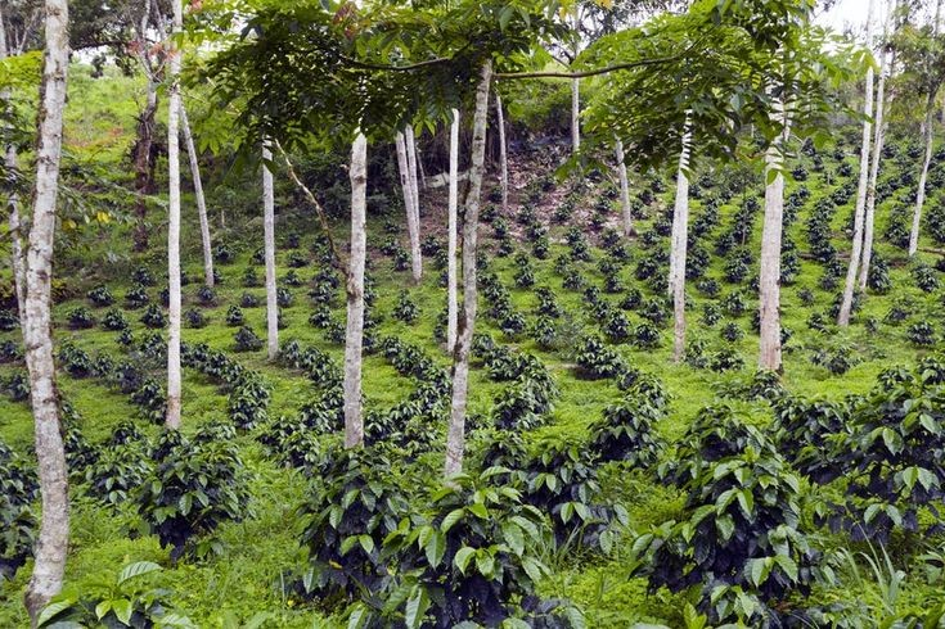
If CBAM logic extends to agriculture without differentiation:
- Truly problematic products and those that are more virtuous could be subject to the same regulatory treatment.
- Sustainable value chains in the South could be penalised by an aggregated approach.
- Small producers, less able to absorb the costs of carbon certification, would be severely disadvantaged compared to large agribusinesses.
Climate regulation without nuance risks is fueling polarization: virtuous Europe vs. polluting South. Green transition vs. green protectionism.
Reality is far more complex.
Beyond the war of standards
More fundamentally, the debate is framed incorrectly. We are arguing about regulatory symmetry. But the real issue is systemic fragility.
Across Europe, Latin America, and Africa, agriculture faces the same constraints:
- Climate volatility
- Soil degradation
- Water scarcity
- Fossil-input dependence
The question is no longer whether trade rules are fair today.
It is whether our production systems will remain viable by 2030 or 2050.
- Fossil inputs dependence is a geopolitical vulnerability.
- Export monocultures are climate-risk amplifiers.
- Externalizing environmental costs is reaching structural limits.
A necessary paradigm shift
Without a deep transition toward more diversified, lower-input, resilient agroecological systems, CBAM will remain a bureaucratic patch on an overheating engine.
The objective cannot simply be to level the playing field and continue as before.
We need a new global agricultural compact — one where decarbonization is not perceived as a tax, but as the only survival strategy in an era of climate instability.
Question for the community: If carbon becomes a structural condition of market access, how do we ensure that the transition is fair — both for European farmers and for producers in the Global South?
Looking forward to your thoughts.