16 October 2026
When the seasons shift : when adaptation is no longer enough
Changing sowing dates, switching varieties or improving water management can help farms cope with a changing climate. But every adaptation works only within limits. The harder question is knowing when adjusting the current system is no longer enough.
In brief: Adaptations that work today can lose effectiveness as warming continues. Some create new risks while solving old ones. The goal isn’t to find one perfect fix but to choose actions that keep future options open.
Every adaptation has a ceiling
In the previous article, we looked at the levers farmers can pull as crop calendars shift, from small adjustments (sowing dates, varieties) to bigger changes (new rotations, new crops, redesigned systems). But there’s a follow-up question: how long will each lever keep working?
A drought-tolerant crop helps only while enough water remains. An earlier sowing date helps only until a new damaging climate window appears. The IPCC calls the point where adaptation can no longer protect a system from intolerable risk an adaptation limit, and it distinguishes two kinds:
- A soft limit occurs when solutions exist but aren’t accessible because of cost, technology, governance, knowledge or infrastructure. These limits can move: better finance, a breeding breakthrough or new infrastructure can push them back.
- A hard limit occurs when no feasible action can prevent the unacceptable risk, and no investment will shift it.
The IPCC also concludes that common agricultural responses (better cultivars, improved agronomy, changes in cropping systems) become less effective as warming increases.
Irrigation: when the fix depends on a disappearing resource
Irrigation shows adaptation limits clearly. At field level, adding water protects yields from heat and drought. At system level, the places that most need irrigation are often the places where water is running short.
A 2026 global study in Nature Food estimated the irrigation needed to offset warming-related losses in wheat, maize, rice and barley. Under 1.5°C and 3°C warming, irrigation could protect substantial production, but only about 60% of the extra cropland needing irrigation could be supplied without causing local water scarcity or depleting freshwater.
The technology exists and the agronomic benefit exists, but the resource may not.
When adaptation backfires
Some adaptations reduce one risk while creating another. The IPCC calls this maladaptation, and agriculture is one of the sectors where evidence of it is growing.
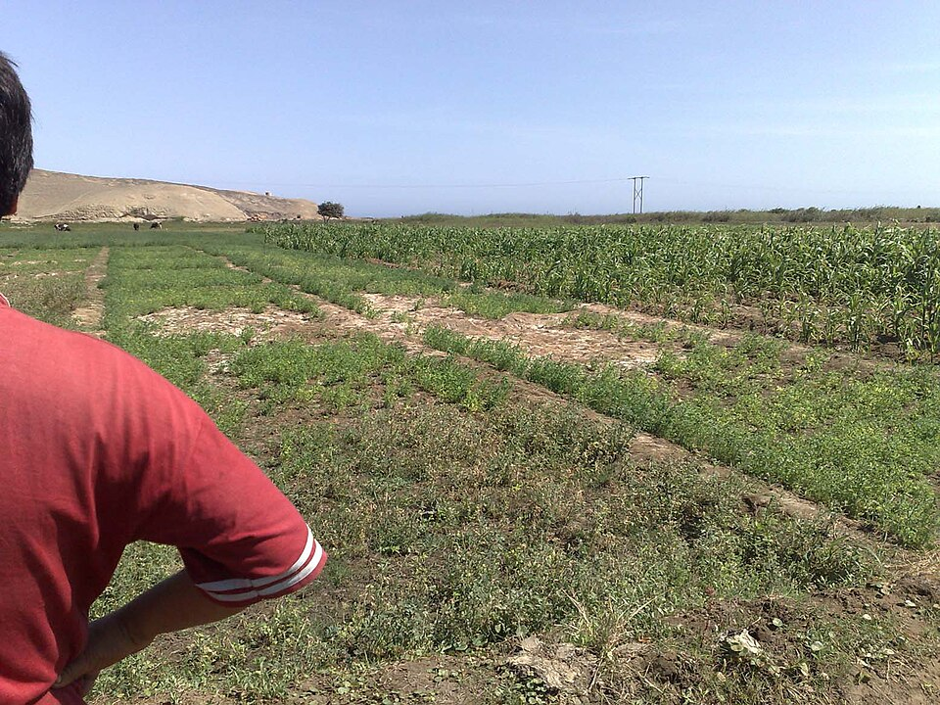
Irrigation is again the clearest case. It can lock basins into water-intensive crops as water declines. In arid and semi-arid regions, repeated irrigation with high evaporation and poor drainage leaves salts in the root zone, degrading soil, cutting yields and ultimately raising the water needed to keep producing.
Other adaptations carry similar trade-offs. A shorter-cycle variety can help a crop escape terminal drought but lower yields in good years. Sowing earlier can avoid summer heat but increase frost exposure. A climate-suited new variety may depend on markets or inputs that farmers can’t easily access. And relocating production can reduce climate exposure in one place while adding pressure on land and the environment somewhere else.
None of these are necessarily bad choices. The point is that optimising for one risk is not the same as making the whole system resilient.
Three levels of adaptation: management, crop, geography
Perennial crops make limits especially visible, because a planting decision can last decades.
Vineyards. Winegrowers can adjust canopy and soil management, add irrigation, change rootstocks or move to later-ripening varieties. These measures extend viability. But recent European modelling projects losses in climatic suitability across parts of the Iberian Peninsula and gains further north and in central Europe. That suggests three distinct levels of adaptation: changing the management, changing the crop, and eventually changing the geography of production.
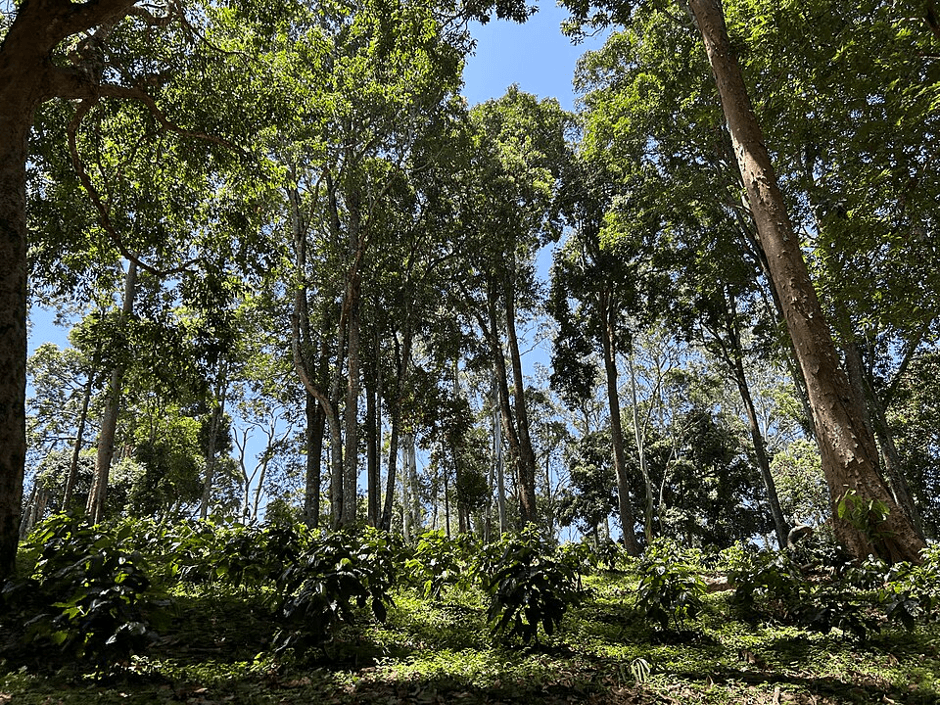
Coffee. Arabica is highly temperature-sensitive. Shade trees (agroforestry) can cool the microclimate and conserve moisture, and research in southeast Brazil suggests substantial shade cover could reduce projected suitability losses. But shade has limits. In southwestern Ethiopia, vegetation could buffer warming at intermediate elevations, while lower-elevation coffee may eventually need to move uphill. Continental-scale modelling projects significant yield losses in parts of Latin America and Africa that shading alone may not offset.
Moving uphill isn’t just agronomy. In Peru, many coffee farmers considered relocating plantations to higher ground, but the cost and practical barriers of establishing new ones put it out of reach for many households. A technically feasible adaptation can hit a social or economic limit long before a biological one.
When changing the crop becomes the adaptation
Eventually, keeping the same crop may stop being the right goal. Crop switching asks a different question: not “how do we keep this crop going?” but “what should we grow here now?”
This is structural change. It affects processing equipment, supply chains, farmer knowledge, inputs, labour calendars, credit and markets. Yet under large enough climate shifts, it can beat pouring ever more inputs into an increasingly unsuitable crop. A 2026 study across China found that reallocating crops according to future climate, production, water and greenhouse-gas constraints could deliver higher production, better profitability and lower water use than keeping current patterns.
Crop switching isn’t always better. But adaptation can eventually shift from optimising the system to changing which system is being optimised.
Five warning signs that an adaptation is running out of road
There’s no universal threshold, but these questions can help flag when incremental fixes are losing ground:
- Diminishing returns: Is each new adjustment delivering less protection than the last?
- Rising dependence: Does keeping the system going require ever more water, energy, fertiliser or capital?
- Risk transfer: Is solving one problem creating another, on the farm or elsewhere?
- Shrinking flexibility: Are decisions locking you into infrastructure, crops or investments that are hard to reverse?
- Fragile robustness: Does the strategy work under only one climate scenario, or across several plausible futures?
The last one matters most. Recent work on irrigated agriculture argues for moving beyond “predict, then act” towards strategies tested across a range of possible futures.
Match your planning horizon to the decision
How far ahead you need to look depends on how long a decision lasts:
How far ahead you need to look depends on how long a decision lasts. A new sowing date can be reversed next season. A variety change plays out over several seasons. An irrigation system is an investment that lasts years to decades. An orchard or vineyard can lock in choices for decades, and reshaping a regional value chain takes longer still.
The longer a decision lasts, the more it should be judged against the climate pathway ahead, not just today’s conditions.
From measures to pathways
Adaptation is better seen as a pathway than a destination. A farm might first shift sowing dates, then adopt new varieties, then change irrigation or soil management, then diversify rotations, and eventually replace a crop or restructure production entirely.
Not every system needs every step, and transformation isn’t a failure of incremental adaptation. Often, small adjustments are exactly what buy the time and flexibility needed to prepare for deeper change.
The key test is whether today’s action keeps tomorrow’s options open. A measure that works now but locks a farm into high water dependence, costly infrastructure or an increasingly unsuitable crop narrows future choices. The IPCC stresses that long-term, flexible, integrated planning reduces maladaptation, and that moving from incremental to transformational adaptation can help overcome some soft limits.
Key takeaways
- Adaptation has limits. What works today may work less well with further warming.
- Limits come in many forms: water, crop physiology, finance, infrastructure, technology access.
- Watch for maladaptation: fixes that create new risks or lock in unsustainable pathways.
- Long-lived decisions need long-term thinking, especially vineyards, orchards and plantations.
- Transformation may be necessary: new crops, new systems or new locations.
- Test for robustness across several plausible futures, not just today’s climate.
- The aim isn’t to predict one perfect future, but to keep viable options as conditions change.
Closing the series
When the Seasons Shift explored three connected questions: How is climate change altering crop cycles? How can agriculture adapt as those cycles move? And how do we know when adaptation itself needs to change?
The answers differ by crop, region and farming system. But one principle holds everywhere: the real question isn’t just “what should we change today?” but “what can we change today that still leaves us viable choices tomorrow?” In a moving climate, resilience isn’t only withstanding the next shock. It’s the ability to keep adapting as conditions keep changing.