17 September 2026
When the seasons shift: How climate change is rewriting crop cycles

Article 1 – Climate change is rewriting the crop calendar
For generations, farming has been organised around a relatively familiar sequence of events: sowing, emergence, flowering, fruit or grain formation, maturity and harvest.
The exact dates have always varied from year to year. But behind that variability was a degree of climatic regularity. Winter brought sufficient cold. Spring triggered renewed growth. Summer accumulated the heat crops needed to reach maturity. Farmers adapted their decisions around these seasonal patterns.
Climate change is altering that reference system. Its impact on agriculture is often described through changes in yields, drought frequency or extreme temperatures. But another transformation is taking place, one that is less immediately visible: the biological calendar of crops itself is shifting.
Plants are reaching key developmental stages earlier, later, or over shorter periods. In some cases, warming accelerates development. In others, warmer winters delay the fulfilment of chilling requirements. Changes in rainfall can modify planting dates or interact with temperature to alter development.
The result is not simply an earlier harvest. It is a changing relationship between the crop, its biological cycle and the climate conditions it encounters at each stage of that cycle.
The IPCC concludes with high confidence that warming has already altered the timing of key biological events such as flowering, with consequences for harvest stability and food quality. Across much of the extratropical Northern Hemisphere, the thermal growing season increased by around two days per decade between 1951 and 2018.
About this series
When the seasons shift explores how climate change is reshaping crop cycles across regions and farming systems and what those shifts mean for agricultural adaptation.
Over the coming articles, we will look at why the timing of climate events matters, what happens when warming accelerates crop development, why flowering is such a critical period, how planting windows and varietal choices may need to evolve, and what happens when incremental adjustments are no longer sufficient.
We begin with a fundamental question: what makes a crop calendar change?
A crop calendar is a biological clock
A crop calendar may look like a sequence of dates, but plants do not read calendars. They respond to environmental signals. The timing of key developmental stages, known as phenology, is controlled by several interacting factors.
Temperature
For many crops, development depends partly on accumulated heat. Agronomists often describe this using thermal time or growing degree days. A plant needs to accumulate a certain amount of heat above a base temperature before reaching a particular developmental stage. Warmer conditions can therefore accelerate this accumulation. A stage that historically occurred in late May may begin occurring earlier because the plant reaches its thermal requirement sooner.
But faster is not necessarily better. If warming shortens a critical developmental phase, the crop may have less time to build biomass or fill grains.
Day length
Some plants also respond strongly to photoperiod, the length of daylight. Rice, soybean and many other crops have genetic mechanisms that use day length as a signal for flowering. Temperature and photoperiod can therefore interact: a warmer climate may accelerate some processes while daylight continues to impose biological constraints on others.
Winter cold
For winter cereals and many perennial crops, warmth is only part of the story. Some plants first need exposure to sufficient cold before development can resume normally. In winter cereals, this process is known as vernalisation. Fruit trees and other perennial crops similarly accumulate winter chilling before dormancy can be released. A warmer winter can therefore produce a seemingly paradoxical situation: more heat does not necessarily mean earlier development. If insufficient cold has accumulated, flowering or budbreak may be delayed or become more irregular.
Water
Water availability affects both plant growth and agricultural decisions. Rainfall can determine when fields are accessible, when a crop can be planted, and how rapidly the plant develops. Drought can accelerate senescence or shorten parts of the cycle, while excessive rainfall can delay sowing or harvesting.
So there is no single “climate clock”. Crop development emerges from an interaction between temperature, light, water, genetics and management. That helps explain why climate change is producing very different outcomes across crops and regions.
Four crop examples, four changing calendars
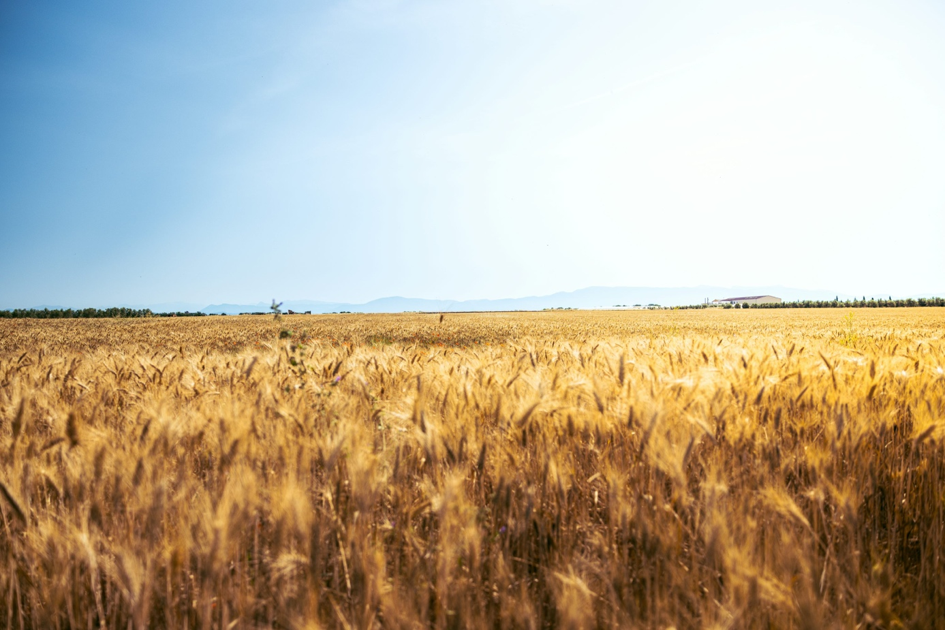
1. Wheat in Europe: when heat pushes the crop through its final stages
Simon Spring (@springsimon)
The European summer of 2026 offered a striking example of how quickly the agricultural calendar can change.
Repeated heatwaves across western and southern Europe shortened the grain-filling phase of winter crops and brought harvests forward. In Spain, high temperatures shortened grain filling in winter cereals. Elsewhere in western and central Europe, winter and spring crops matured prematurely, with concerns for grain size and quality. By August, the European Commission’s Joint Research Centre was also reporting premature senescence and impaired grain filling across several major agricultural regions.
The mechanism matters. After flowering, wheat enters the grain-filling period, when carbohydrates produced by the plant are transferred into the developing grain. If high temperatures accelerate development, physiological maturity can arrive sooner. The crop has effectively reached the end of its cycle, but with fewer days available to fill the grain.
Research on wheat in France illustrates why the interaction between phenology and climate risk is increasingly important: as crop stages shift, the crop’s exposure to frost, heat and drought also changes.
The question is therefore not simply whether France or Spain becomes warmer. It is whether wheat reaches sensitive stages at a different time and what weather it encounters when it gets there.
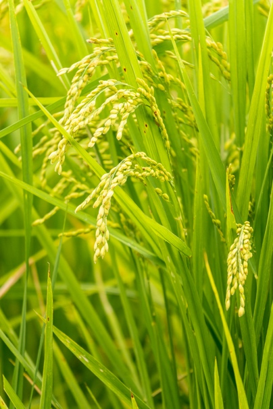
2. Rice in China: warming meets management
Winston Chen (@winstonchen)
Rice provides another important lesson: climate does not act alone. Using observations from 82 agrometeorological stations across China between 1981 and 2012, researchers found that warming tended to accelerate rice development and shorten the period between emergence and maturity.
For single-season rice, the shortening attributable to warming was substantial. But farmers and breeders were changing the system at the same time: planting dates shifted and different cultivars were introduced, sometimes compensating for the acceleration caused by higher temperatures.
This is critical because an observed crop calendar is the result of both climate-driven biological change and human adaptation. Recent research on ratoon rice in 16 Chinese provinces reinforces this point. Future warming is projected to advance phenological stages, but adjusting sowing dates can partially change the crop’s exposure to heat and cold during key stages. Importantly, the modelling suggests that changing sowing dates alone would not eliminate future climate risk. The crop calendar is therefore not simply moving. It is being actively renegotiated between plant physiology, climate and farming decisions.
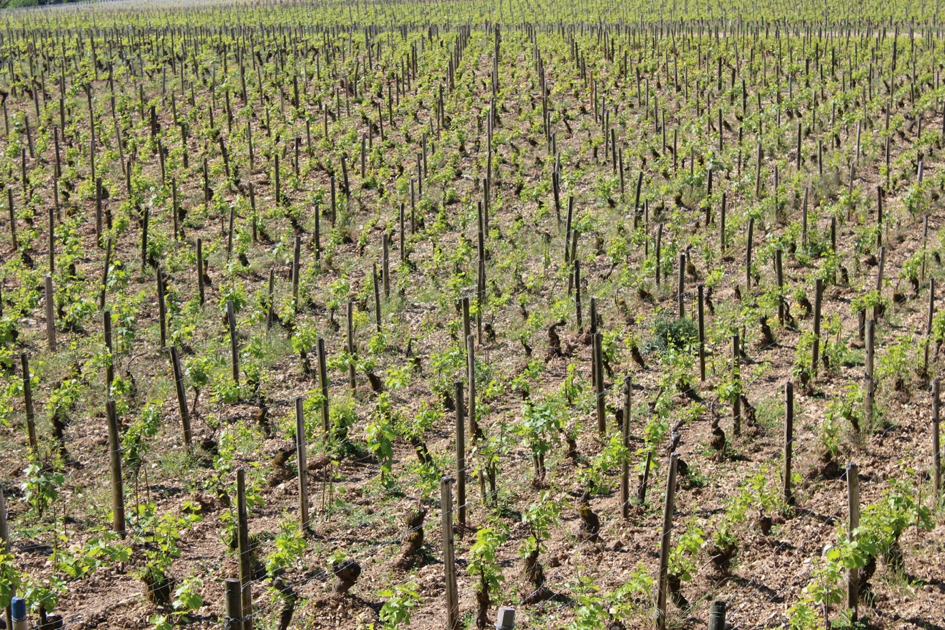
3. Wine grapes in France: centuries of harvest dates tell a climate story
vinsdebourgogne.nl (@vinsdebourgogne)
Few crops illustrate the relationship between climate and phenology as vividly as grapevine. European wine regions have exceptionally long records of grape harvest dates. In Burgundy, some historical series extend back several centuries and have even been used to reconstruct past summer temperatures.
Research using harvest records from France and Switzerland from 1600 to 2007 found a strong relationship between warmer spring and summer temperatures and earlier harvests. Across the historical dataset, an additional degree Celsius was associated with harvests occurring roughly six days earlier.
But the study revealed something even more interesting. Historically, exceptionally early harvests tended to occur when warm conditions were associated with drought. In recent decades, that relationship changed: anthropogenic warming increasingly allowed the temperatures associated with early maturation to occur without the same drought conditions. In other words, climate change did not simply move the harvest date. It altered the climatic relationships that historically determined that date.
For perennial crops such as grapevine, this poses a particular challenge. A cereal farmer may modify a sowing date from one season to the next. A vineyard planted for several decades cannot be repositioned nearly as easily.
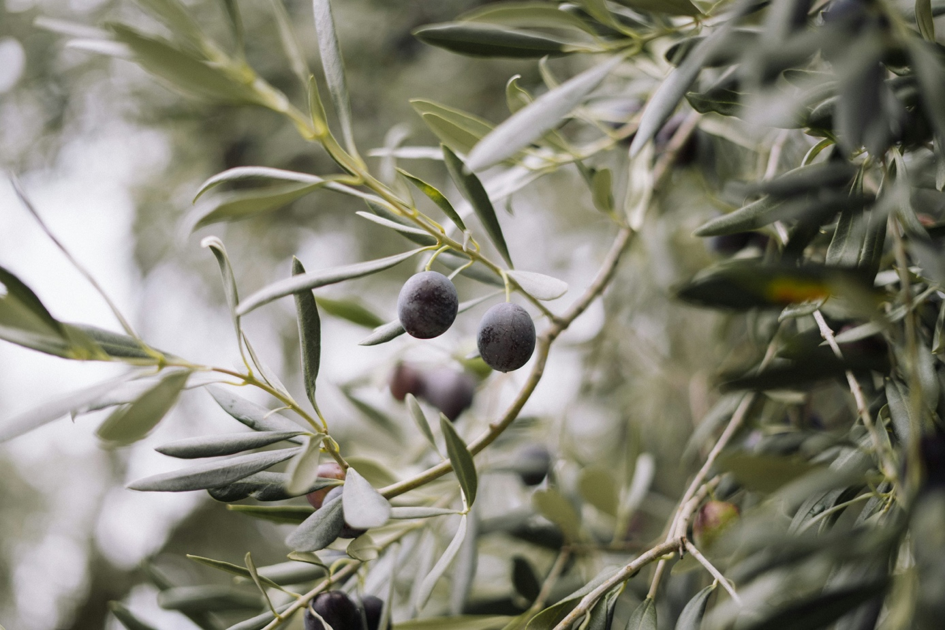
4. Olives in the Mediterranean: warmer does not always mean earlier
Melina Kiefer (@melimascella_)
Olive trees provide perhaps the best warning against assuming that climate warming simply shifts every crop stage forward. Olive flowering depends on two opposing temperature processes. During winter, the tree needs to accumulate sufficient chilling. Once that requirement has been met, warmer conditions help accumulate the heat necessary for development and flowering. As winters become warmer, these processes can pull in opposite directions.
Research in Portugal’s Alentejo region found that warmer winters were delaying the fulfilment of chilling requirements, while warmer springs shortened the subsequent period needed to reach flowering. The two effects largely compensated for each other. As a result, researchers did not observe a straightforward long-term advance in average flowering onset. What did increase was year-to-year variability.
That distinction matters enormously. A crop whose flowering date becomes harder to anticipate may create new challenges for crop protection, irrigation, pollination, labour organisation and harvesting even if the long-term average date changes relatively little. And responses are unlikely to be uniform across the Mediterranean. A 2025 modelling study projected significant advances in olive phenology across more than 75% of the Euro-Mediterranean study area by mid-century, with differences between cultivars and particularly complex responses in southern regions.
Climate change is changing more than dates
These examples point to a broader conclusion.
A shifting crop calendar can affect almost every major agricultural decision. If flowering occurs earlier, will the crop encounter more or less heat? If maturity accelerates, will grain filling become shorter? If budbreak moves forward, does exposure to spring frost increase? If winter chilling becomes insufficient, will flowering become irregular? If a growing season becomes thermally longer, does that create an opportunity for a different variety or simply expose the crop to more extreme heat? And if rainfall patterns change at the same time, will farmers even be able to sow when the biological calendar suggests they should?
This is why focusing solely on annual average temperature can be misleading.
Agriculture operates through sequences and windows. A ten-day shift in flowering may matter more than a small change in annual average temperature if it moves reproduction into a period of extreme heat. A shorter grain-filling period may affect yield even if total seasonal rainfall remains unchanged. A warmer winter may be beneficial to one crop and disruptive to another.
The critical question is increasingly not only how much is the climate changing but also when will that change intersect with the crop’s most sensitive stages?
From a fixed calendar to a moving target
For decades, much agricultural planning has been built around historical climate patterns.
Those patterns have never been perfectly stable. But past observations have provided a powerful reference for choosing planting windows, varieties, irrigation periods, crop-protection schedules and harvest dates. Climate change progressively weakens the assumption that the future agricultural calendar will resemble the recent past.
The challenge is not simply that seasons are becoming warmer. It is that biological stages, climatic hazards and management decisions are shifting relative to one another. And those shifts are not uniform. Wheat in western Europe may experience faster maturation under heat. Rice systems in China can partially compensate through changes in cultivars and planting dates. French vineyards provide centuries of evidence that warming can move harvest dates. Mediterranean olive trees show that warmer winters and springs can exert opposing effects on flowering. There is therefore no universal “new crop calendar”. There are many, specific to the crop, variety, location and production system.
Understanding how they are changing is becoming a fundamental part of climate adaptation in agriculture.
Key takeaways
- Climate change affects crop phenology, the timing of key stages such as emergence, flowering and maturity, not only final yields.
- Temperature is a major driver, but crop calendars also depend on photoperiod, winter chilling, water availability, genetics and management.
- Warming does not simply make everything happen earlier. Responses can include accelerated development, shorter phases, delayed chilling fulfilment or greater year-to-year variability.
- Different crops and regions are responding differently. Wheat, rice, grapevine and olive already illustrate very different pathways.
- Timing changes exposure to risk. A shifted flowering or grain-filling period can change whether the crop encounters heat, frost or drought at its most vulnerable stage.
Stay tuned for the next article in When the Seasons Shift.