30 September 2026
When the seasons shift : adapting to a moving crop calendar
Article 2 – As climate change shifts growing seasons and crop development, adaptation is becoming a question of timing, genetics, management and, increasingly, how farming systems themselves are designed.
In the first article of When the Seasons Shift, we explored how climate change is altering the biological calendar of crops.
But recognising that the calendar is moving is only the beginning. The next question is more practical:
What can farmers actually do about it?
There is no single answer.
A farmer can change when a crop is planted. They can change which variety is grown.
They can modify practices to protect the crop during its most vulnerable stages. And, when adjustments at crop level are no longer sufficient, they can reconsider how crops are combined and sequenced across the farming system.
These options operate at different scales and over different time horizons.
Some can be implemented from one season to the next. Others require new seed systems, infrastructure, knowledge, markets or long-term investment. And almost all involve trade-offs. This is why climate adaptation in agriculture is rarely about finding one “climate-smart” practice. It is increasingly about combining several levers as conditions continue to change.
The IPCC identifies changes in sowing and harvesting dates, crop varieties, irrigation and crop choice among the major farm-level responses available to agriculture, while also stressing that their effectiveness depends strongly on local conditions and declines as climate risks intensify.
Four adaptation levers illustrate this particularly well.
1. Shift the timing
Perhaps the most intuitive response to a changing crop calendar is to change the agricultural calendar itself. If a crop is increasingly exposed to extreme heat late in its cycle, why not plant earlier? If frost dates are moving, could planting be delayed? If flowering repeatedly coincides with a dangerous heat period, could planting dates be adjusted so that flowering occurs before or after it?
This is attractive because changing a sowing date can be relatively inexpensive compared with changing irrigation infrastructure, replacing perennial crops or redesigning a farming system. But the evidence also shows why there is no universal rule such as “warmer climate = earlier sowing.”
A 2024 global meta-analysis compiled 94 studies and 3,145 observations examining the consequences of shifting sowing dates. It confirmed that sowing date is a significant agronomic lever, but also found very different outcomes from early and late planting depending on crop and context. Late sowing, in particular, was generally associated with lower biomass and yield.
The optimal direction of change depends on what the crop is trying to escape and what new risk the shift may create.
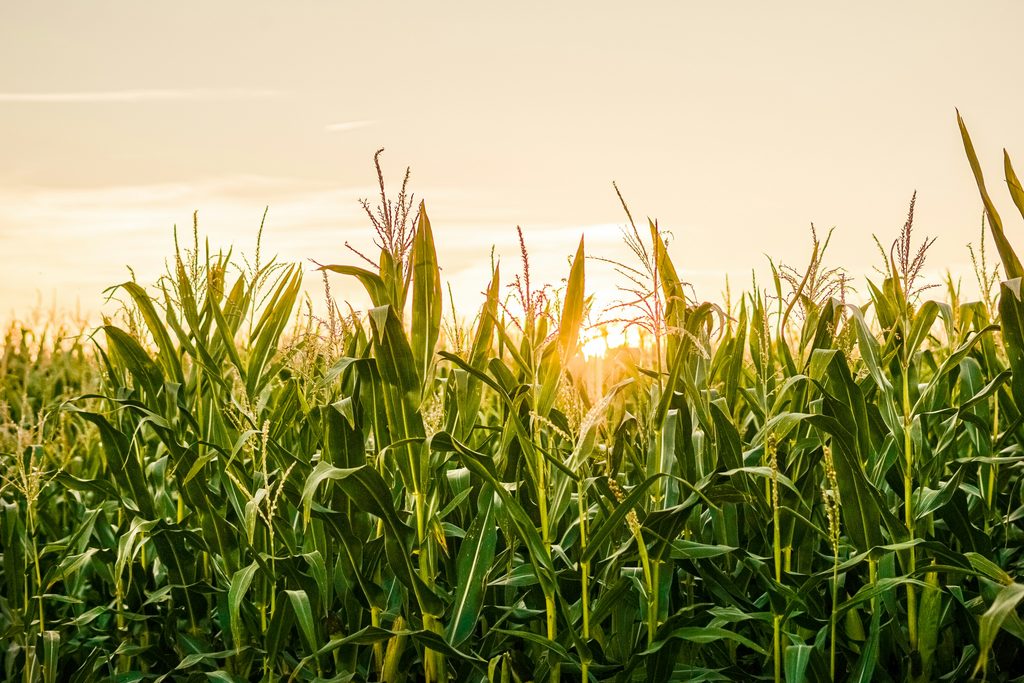
Maize in South Africa: the answer may even be “later”
Sebastian Raatz (@naturea)
South African maize provides a useful example. One might intuitively expect warming to make earlier planting preferable. Yet modelling for major dryland maize-growing regions around Bloemfontein and Lichtenburg suggests a more nuanced picture.
Future warming is projected to shorten the number of days maize requires to reach maturity. At the same time, later freeze dates could lengthen the usable summer season. Under those conditions, later planting may become feasible in some locations, although exposure to temperatures above 35°C is also projected to increase.
A more recent study focusing on small-scale rainfed maize systems in South Africa’s Eastern Cape reached a somewhat different result for its specific conditions: earlier planting combined with suitable short- or medium-cycle varieties helped reduce projected climate-related yield losses.
These findings are not contradictory. They demonstrate precisely why adaptation needs to be local. Different soils, rainfall regimes, frost risks, varieties and growing seasons can lead to different optimal strategies within the same country.
The question is therefore not: Should farmers plant earlier? It is: Which planting window best positions this particular crop, in this particular location, against the climate risks it is likely to encounter ?
2. Change the crop’s biological clock
Farmers can change when they sow. But they can also change the biological characteristics of what they sow.
Varieties of the same crop can differ substantially in time to flowering, duration of the growing cycle, heat requirements, sensitivity to day length, chilling or vernalisation requirements, drought tolerance heat tolerance and the length of reproductive or grain-filling phases.
Choosing a different variety can therefore change the relationship between the crop and the climate without changing the crop species itself.
This is particularly important when the objective is not simply to tolerate higher temperatures, but to avoid having vulnerable developmental stages coincide with dangerous climatic windows.
Rice in Japan: tolerance and timing can complement each other
Rice offers a particularly clear example. High temperatures during flowering can cause spikelet sterility and reduce grain formation. A 2026 study modelled this risk across Japan under historical and projected climate conditions and compared several potential adaptation strategies. Increasing heat tolerance substantially reduced projected sterility.
But so did changing the timing of flowering within the day: varieties flowering earlier in the morning could avoid some of the highest daytime temperatures. The study found that combining adaptation mechanisms provided additional benefits.
This illustrates an important distinction. Climate adaptation through breeding is not limited to producing plants that can simply withstand more heat. It can also involve modifying the crop’s biological clock so that critical events occur at less dangerous times.
Maize in sub-Saharan Africa: maturity length matters too
Across rainfed cereal systems in sub-Saharan Africa, crop maturity characteristics are also part of the adaptation equation. Recent modelling suggests that both early- and late-maturing cultivars can be useful adaptation options depending on region and future climate conditions. In West Africa in particular, changing cultivar maturity was found to reduce some projected impacts on rainfed cereal production.
But access to appropriate varieties is not only a biological question. It depends on breeding programmes, seed multiplication, distribution networks, affordability and farmer adoption.
In eastern and southern Africa, research on maize seed systems has highlighted that varietal turnover can be slow, meaning farmers may continue using varieties developed for climatic conditions that are progressively disappearing. Adaptation therefore depends not only on whether suitable genetics exist. It also depends on whether farmers can access them in time.
3. Protect the critical stages
Sercan Naya (@srcnny)
Changing the calendar or the variety can alter when a crop encounters climate stress. Another strategy is to reduce the severity of the stress itself.
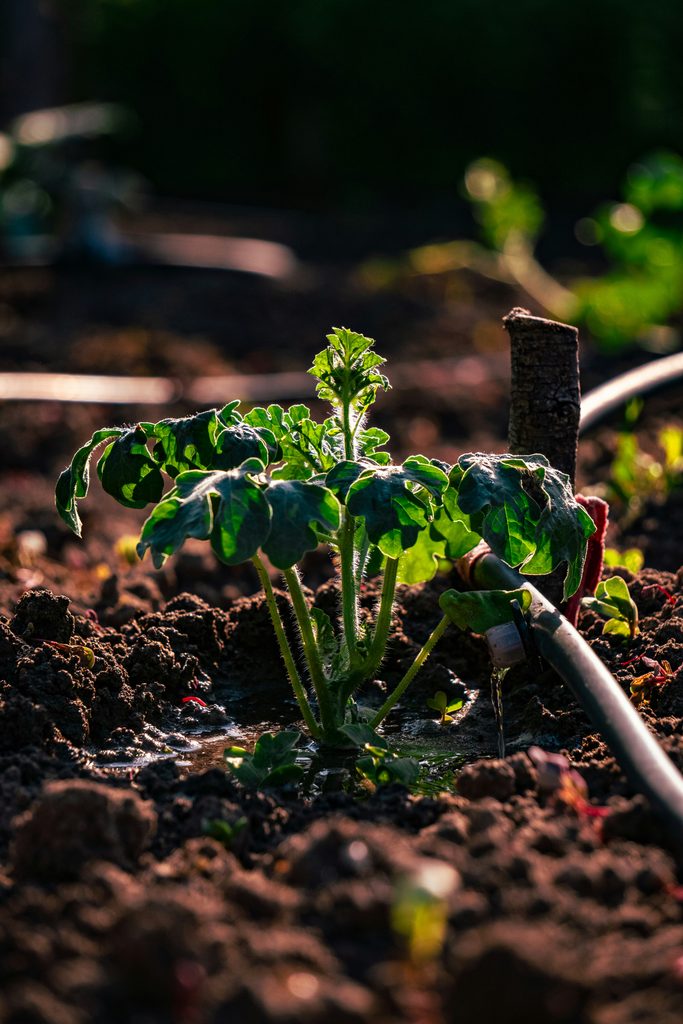
This includes practices such as targeted irrigation, soil moisture conservation, mulching and soil cover, canopy management, shading, improved soil organic matter, frost protection and adjusting water or nutrient management around particularly sensitive crop stages.
The objective is not always to protect the crop equally throughout the season. In some cases, the greatest benefit may come from protecting a specific critical window.
Irrigation is one of the most obvious examples. The IPCC concludes that irrigation can reduce yield losses from heat and drought for crops such as wheat and maize. But irrigation also increases water withdrawals, an important constraint precisely because many agricultural regions are expected to face increasing water scarcity.
That creates a fundamental adaptation trade-off: A strategy that reduces climate risk at field level may increase pressure on a constrained resource at basin level.
This is why the timing and efficiency of irrigation matter as much as its availability.
Rather than trying to eliminate water stress throughout the entire season, irrigation can sometimes be concentrated around stages where the crop is particularly sensitive.
4. Redesign the sequence
Eventually, adaptation moves beyond individual crop management : How should the farming system be organised so that its overall exposure to climate risk is reduced?
This opens a broader set of options : crop rotations, intercropping, sequential cropping, integration of legumes, agroforestry, diversification across crops with different climate sensitivities, changes in seasonal crop allocation and, in some cases, replacement of one crop with another.
The underlying principle is diversification. A highly specialised farming system may perform extremely well under a familiar climatic regime but become vulnerable when several risks affect the same crop at the same time.
Diversification can spread exposure across species, seasons and sources of income.
The IPCC concludes with high confidence that diversification approaches, including mixed planting, rotations, agroforestry and integrated crop-livestock systems, can strengthen agricultural resilience, while also emphasising that benefits and trade-offs depend strongly on socioeconomic and ecological context.
Sub-Saharan Africa: changing the system, not only the planting date
Modelling of cropping systems in sub-Saharan Africa has shown why this distinction matters.
Research comparing different cropping strategies found that adjusting sowing dates could reduce climate impacts, but sequential cropping systems were often less vulnerable than single-crop systems. In some locations in Kenya and South Africa, particular sequential systems even produced positive projected responses where other systems experienced losses.
The point is not that multiple cropping is always superior. It is that climate adaptation can operate at several levels: field operation, crop, rotation, farming system.
A change at one level can sometimes compensate for limitations at another.
Adaptation is a portfolio, not a single intervention
These four levers are often discussed separately. In reality, they interact.
A farmer might move the planting date and choose a different maturity class and improve soil water retention and change the rotation.
The value of one decision can depend on the others. An earlier sowing date may work with one cultivar but not another. A later-maturing variety may perform well if irrigation is available but become too risky under rainfed conditions. A new crop may be agronomically suitable but commercially unrealistic if there is no buyer, processing infrastructure or seed supply. A diversified rotation may improve resilience but require new equipment or knowledge.
This is an important reason why climate adaptation cannot be understood only as a technical problem. It is also constrained by economics, infrastructure, labour, knowledge, access to inputs, land tenure and markets.
Key takeaways
- Changing sowing dates is one of the most accessible adaptation levers, but there is no universal direction of change. Earlier or later planting can both be appropriate depending on crop, location and climate risk.
- Varietal choice changes the crop’s biological relationship with climate. Maturity length, flowering time, heat tolerance and chilling requirements can all influence future suitability.
- Protecting critical stages can be more efficient than treating the entire season equally. Water, soil and canopy management can help buffer sensitive periods.
- Irrigation is powerful but constrained. Reducing field-level climate risk can increase pressure on limited water resources.
- Diversification extends adaptation beyond the individual crop. Rotations, intercropping, sequential systems and agroforestry can spread climate risk across species and seasons.
- Adaptation measures interact. Combining timing, genetics and management can be more effective than relying on a single intervention.
- Adaptation has limits in time. A strategy that works under today’s climate may become less effective as warming progresses.
Stay tuned for the next article in When the Seasons Shift.