23 August 2026
Living soils: the foundation of agricultural resilience
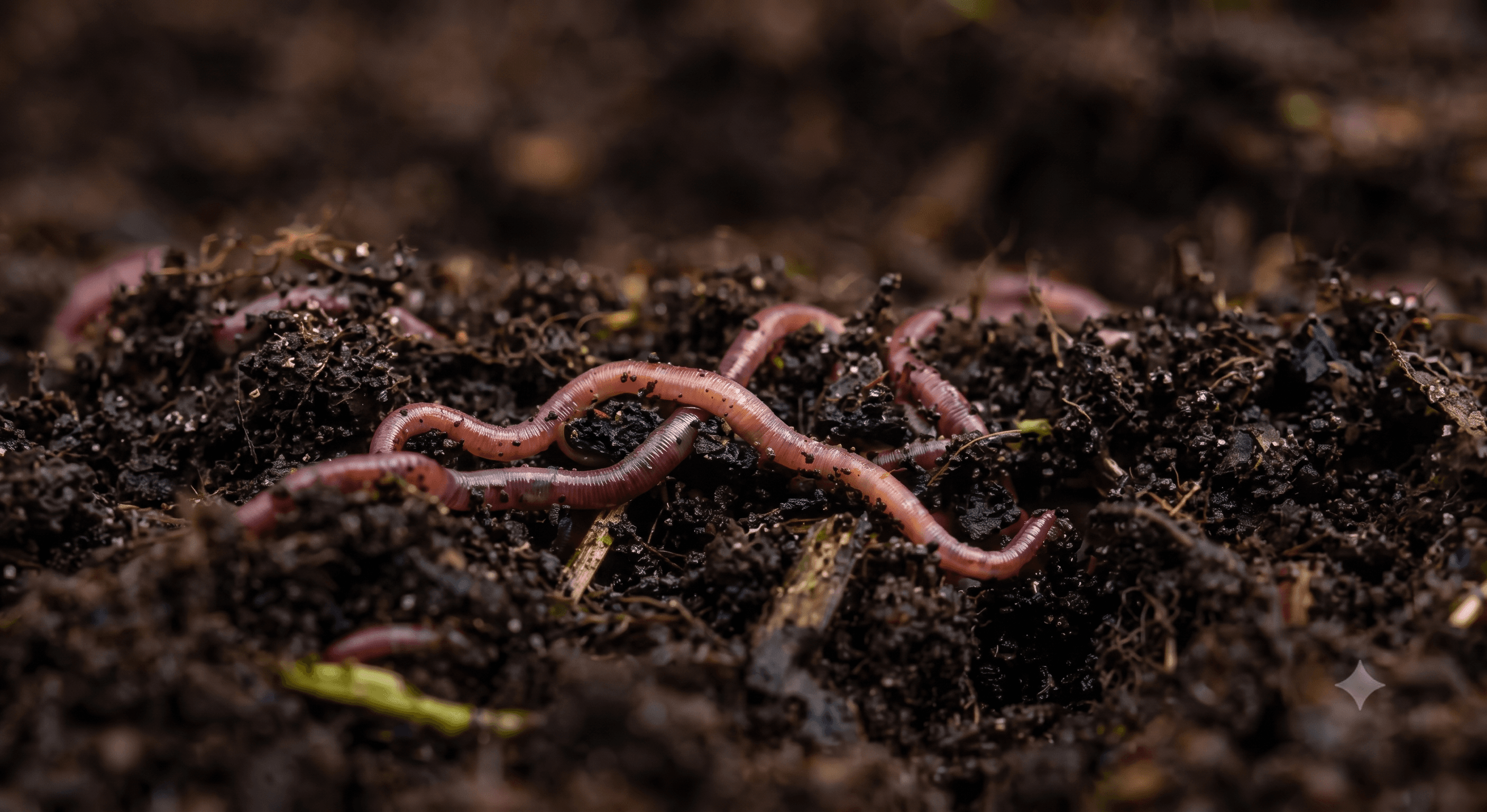
Soil is often treated as a surface to work and plant. It is in fact a living ecosystem crossed by water, air, roots, fungi, bacteria and countless organisms. Its health affects agricultural production, but also a territory’s capacity to absorb climate shocks, store carbon and maintain water cycles.
Soil as an ecosystem
A living soil has structure. Aggregates create spaces that allow air and water to circulate, while organic matter feeds organisms and helps retain moisture. Earthworms, fungi and microorganisms transform residues into nutrients available to plants. Roots, in turn, release compounds that feed soil life and explore different layers.
When this organisation is damaged by repeated disturbance, bare soil or compaction, the consequences are visible. Water runs off instead of infiltrating, roots struggle to grow, machinery becomes harder to use and crops become more exposed to heat and drought. Rebuilding soil health is therefore both an agronomic and a climate adaptation strategy.
Keep the soil covered
Cover crops, living mulches, crop residues and carefully managed vegetation protect the soil surface from rain impact, wind and temperature fluctuations. A covered soil is less likely to crust or erode, and its surface loses less water through evaporation.
Cover does not mean leaving a crop unmanaged. The species, density and timing must fit the following crop, available water and equipment. A cover can be grazed, rolled, mown or terminated at the right moment. The objective is to protect the soil while maintaining a useful balance between biomass production, water consumption and ease of establishment.
Reduce disturbance and compaction
Tillage can be useful in some situations, but repeated or deep disturbance breaks aggregates, accelerates the loss of organic matter and disrupts soil organisms. Reduced tillage or direct drilling can help preserve structure when combined with adequate rotations, residue management and weed control.
Compaction deserves the same attention. Working on wet soil, concentrating traffic or using unsuitable equipment can create dense layers that restrict roots and water. Planned traffic lanes, lower axle loads and interventions at the right moisture level can reduce this risk. There is no single technique: the appropriate level of disturbance depends on soil type, climate, crops and farm organisation.
Build organic matter over time
Organic matter comes from roots, crop residues, manure, compost and other biological inputs. It improves aggregation, water retention and nutrient cycling, but its effects accumulate progressively. A useful strategy combines continuous soil cover, diverse rotations, deep-rooted crops and inputs that are available locally and compatible with farm economics.
The aim is not to maximise the amount of material added without considering its origin or decomposition. A high-quality transition looks at the whole cycle: where the biomass comes from, how it is transported, which nutrients it supplies and what labour or equipment it requires. Soil fertility is strengthened when biological processes and farm resources are managed together.
Connect soil health with climate adaptation
Healthy soils can help crops withstand short dry periods, recover after intense rain and make better use of available nutrients. They do not eliminate climate risk, but they increase the range of conditions in which a farming system can remain productive. This resilience is strengthened when soil practices are combined with crop diversity, water management and adapted varieties.
It is useful to track a small set of indicators: aggregate stability, infiltration time, soil cover, earthworm presence, root development, organic matter, yields and the number of field operations. The most valuable indicator is one that helps make a decision, such as changing a cover-crop mix, adjusting a traffic plan or revising a rotation.
Start with a manageable transition
A farm does not need to transform every field at once. A pilot plot can be used to compare a cover crop, a rotation or a reduced-disturbance practice under real working conditions. The results should be discussed with the people who operate the fields, because labour, timing and equipment often determine whether a practice can last.
Living soils are built through repeated choices rather than a single intervention. By protecting the surface, supporting biological activity and observing how water and roots move through the profile, farmers can create a stronger foundation for production and climate adaptation.