23 August 2026
Diversification: spreading risk and strengthening ecosystems
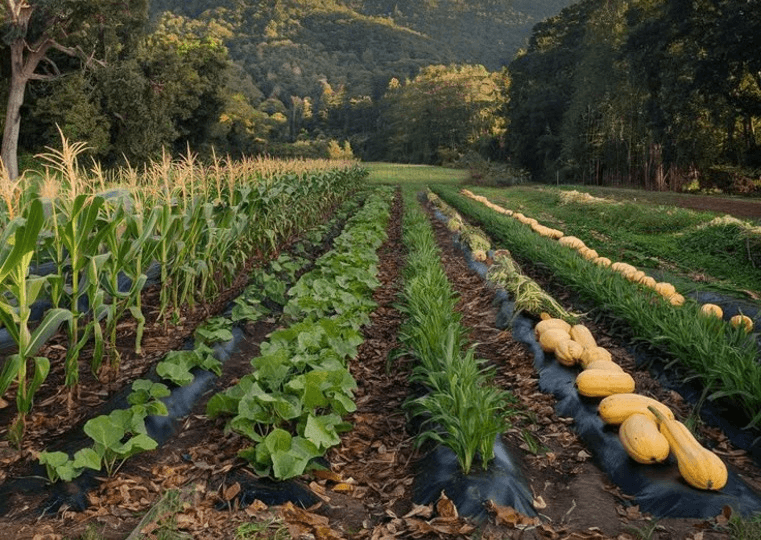
Diversification is a way of reducing dependence on a single crop, variety, season or market. It can involve rotations, mixtures, several varieties, livestock, trees, processing activities or different sales channels. The appropriate combination depends on the territory, the farm’s capacities and the objectives being pursued.
Why diversity creates resilience
A uniform system can be efficient under stable conditions, but it may be vulnerable when a pest, drought, heat wave or price shock affects its main activity. Diverse systems distribute risk. If one crop performs poorly, another may provide food, fodder, income or soil cover. Different roots and growth cycles also make use of resources at different times and depths.
Diversity can support ecological functions. Flowering plants feed pollinators, habitat strips support natural enemies of pests and rotations interrupt disease cycles. Deep-rooted crops can improve soil structure, while legumes contribute nitrogen to the system. These benefits are not automatic: they depend on design, timing and management.
Diversify through rotations and associations
A rotation can combine cereals, legumes, oilseeds, forage, vegetables or cover crops. The sequence matters. A crop may prepare the soil for the next one, break a pest cycle or leave residues that protect the surface. Longer rotations can create more flexibility, but they must remain compatible with labour, equipment and markets.
Intercropping and mixtures bring several species together in the same field. They can improve resource use and reduce the impact of a localised problem, but they also make sowing, harvesting and quality management more complex. Trial plots help determine which combinations work in the local climate and with available machinery.
Combine productive and ecological functions
Diversification is not limited to the main crop. Flowering strips, hedges, agroforestry, ponds and permanent grass can contribute to biodiversity, water management and microclimate regulation. These elements occupy space and require maintenance, so their design should be connected to farm priorities rather than added as isolated features.
The question is not simply how many species are present. It is whether the system creates useful complementarities without increasing competition beyond what the farm can manage. A diverse system must remain readable and workable for the people who operate it.
Connect diversification with economic choices
Every new activity brings possible benefits and costs. A new crop may open a market but require new equipment, storage, processing or advice. Livestock can make use of cover crops and residues while adding work and investment. A new sales channel may improve value capture but demand time for coordination and customer relations.
Assessing diversification means looking beyond yield. It includes labour peaks, cash-flow timing, risk reduction, input savings, product quality and the ability to recover after a bad season. Gradual experimentation allows a farm to test a new activity before making a larger commitment.
Organise learning and cooperation
Diversification often depends on knowledge that is not available in a standard technical package. Farmers can compare varieties, planting dates, harvest methods and market opportunities through peer groups, demonstration plots and local networks. Processors, cooperatives and buyers also have a role in making new products viable.
Records should capture both successes and difficulties. Yield, quality, labour time, input use, pest pressure, soil cover and sales can be reviewed after each season. This evidence helps distinguish a temporary setback from a design problem and makes future decisions more precise.
Build a portfolio that fits the territory
There is no ideal level of diversity. A system with too few activities may remain exposed, while one with too many may become impossible to coordinate. The right portfolio balances ecological functions, farm capacity, market opportunities and the farmer’s willingness to manage complexity.
Diversification is therefore a process of learning and adjustment. By combining complementary crops, varieties, habitats and activities, agricultural systems can spread risk, support biodiversity and create more options when climate and economic conditions change.