23 August 2026
Agroforestry: trees as agricultural infrastructure
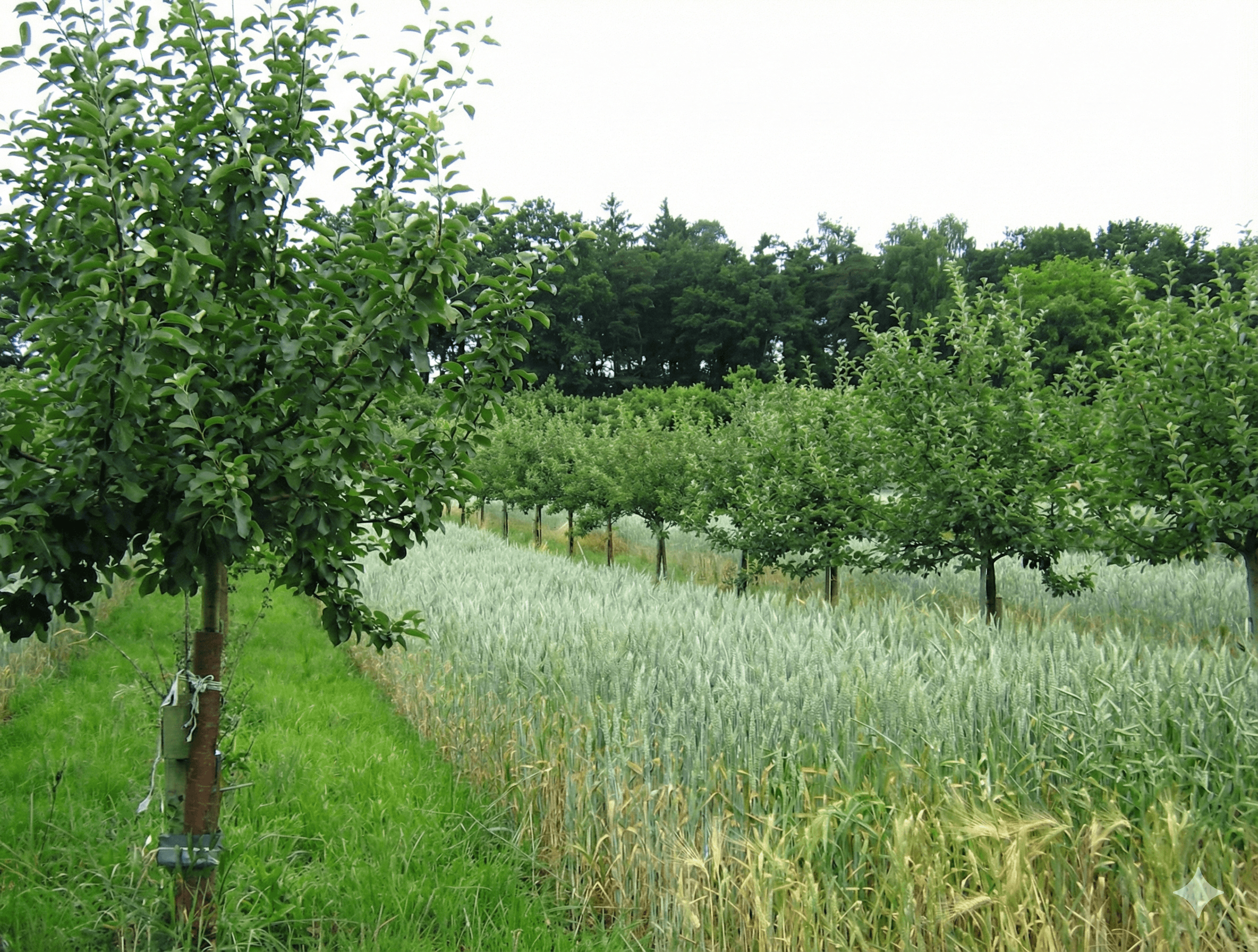
Agroforestry brings trees into agricultural systems without treating them as a separate world. Trees can be planted in rows, hedgerows, orchards, alley-cropping systems or silvopastoral arrangements. Their value comes from the functions they perform over time: protecting soil, providing shade, supporting biodiversity, producing fruit or timber and diversifying farm income.
Design for complementarity
Trees and crops use light, water and nutrients at different heights and depths. This can create complementarity, but it can also create competition. The result depends on species, spacing, orientation, pruning, soil and climate. The aim is not to maximise tree density; it is to design a combination that supports the farm’s objectives.
Roots can stabilise soil, improve infiltration and capture nutrients that might otherwise be lost. Hedges slow wind and runoff, while trees provide habitat and corridors for many species. Shade can reduce heat stress, although dense or poorly placed trees may reduce light or water availability for crops.
Read the site before planting
An agroforestry project starts with a careful reading of the site: prevailing winds, slopes, water flows, soil depth, access, networks, crops and machinery constraints. Future outlets should also be considered early. A tree planted today may need years of care before producing timber, fruit, fodder or other value.
Species selection should combine local adaptation, intended functions and realistic maintenance capacity. Some species are useful for timber, others for fruit, fodder, wind protection or biodiversity. Diversity can increase resilience, but it must remain compatible with available skills, equipment and labour.
Integrate trees into farm operations
Success depends on the organisation of work. Tree rows must allow machinery, crop maintenance and harvesting. Early years require protection from damage, management of competing vegetation and monitoring of establishment. Pruning and harvesting must fit the farm calendar rather than becoming an unfunded extra task.
In livestock systems, trees can provide shade, fodder or shelter from extreme weather. They must nevertheless be designed to prevent overgrazing, injuries and soil degradation. The layout should start from actual uses and animal movements, not from a theoretical model.
Assess the value created
Agroforestry benefits appear over different time horizons. Soil protection and improved animal comfort may be visible relatively quickly, while timber, fruit or biomass production takes longer. A complete assessment includes installation costs, maintenance work, possible savings, future products and services provided to the wider territory.
Simple indicators can guide management: tree survival and growth, erosion, soil moisture, temperature, observed biodiversity, intervention time, crop yields and product value. These data help improve the design and explain results to partners and funders.
Think beyond one farm
Hedges, corridors and water-management features are more effective when planned at landscape scale. Cooperation between farms can improve ecological continuity and reduce costs. Local authorities, associations and supply chains can contribute technical support, funding and outlets for products.
Agroforestry requires long-term thinking. It changes the landscape and the organisation of work progressively rather than providing an instant solution. A small hedge, tree line or silvopastoral plot can be a manageable starting point for testing species, spacing, protection and maintenance before extending the system.
When design, maintenance and economic planning are considered together, trees become a genuine resilience infrastructure. They protect soils, support biodiversity, improve production conditions and create new options for the future.