Today, we are pleased to share our new white paper:
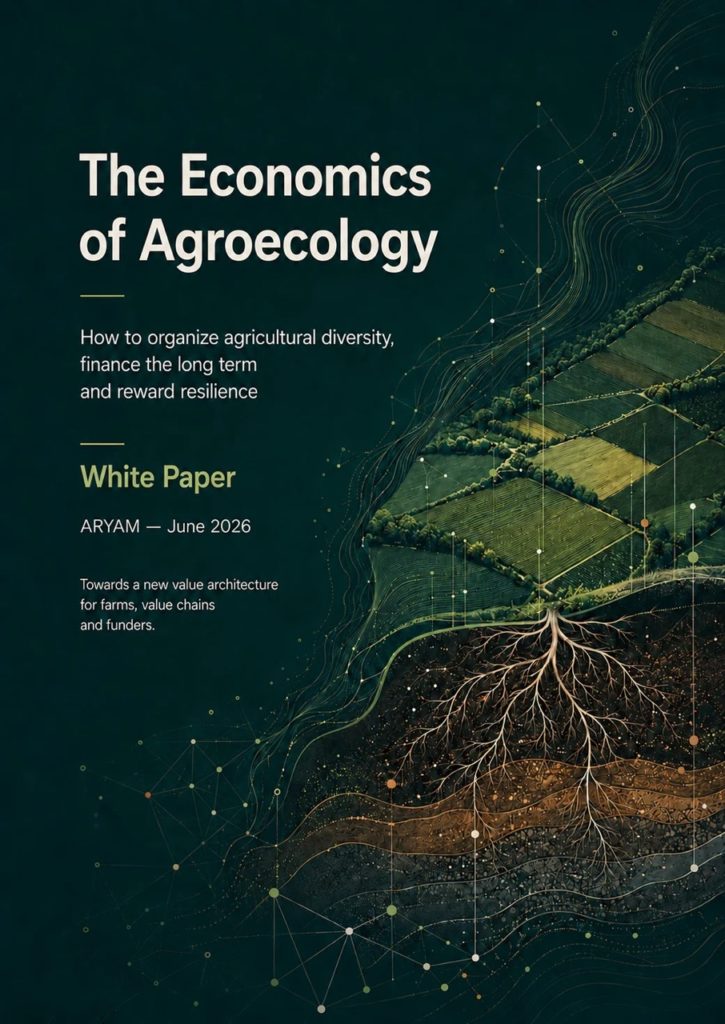
The economics of agroecology.
How to organize agricultural diversity, finance the long term and reward resilience
Agroecology is increasingly recognized as a critical response to the limits of intensive agriculture: soil degradation, water stress, biodiversity loss, climate vulnerability, input dependency and fragile farm incomes.
Yet despite its agronomic relevance, agroecology still struggles to scale.
Why? Because the issue is not only technical. It is economic.
As long as markets, contracts, financial tools, public policies and impact measurement systems continue to reward volume, standardization and short-term performance, agroecology will remain confined to niches.
In this white paper, we explore how to build a new value architecture for agroecology: one that can make resilience visible, finance long-term transitions, support diversified farming systems, and better share risks across farmers, value chains, funders and public actors.
We hope this white paper contributes to the conversation on how to make agroecology not only desirable, but economically viable.