The IPCC 6th report
What has changed?
As it starts with its recurrent warning about the insufficient pace and scale of climate action to tackle the rapidly growing adverse impacts of climate change, the latest IPCC report might give a feeling of deja vu.
Some key differences versus the 5th edition are worth highlighting though :
First, the approach for climate science has considerably gained in maturity and tackles in a much more integrated way the impact of climate change and the response measures, bringing a clearer picture of the path forward.
Second, a strong focus is made on a set of concrete tested solutions and available adaptation options, providing a more positive narrative and a glimpse of hope.
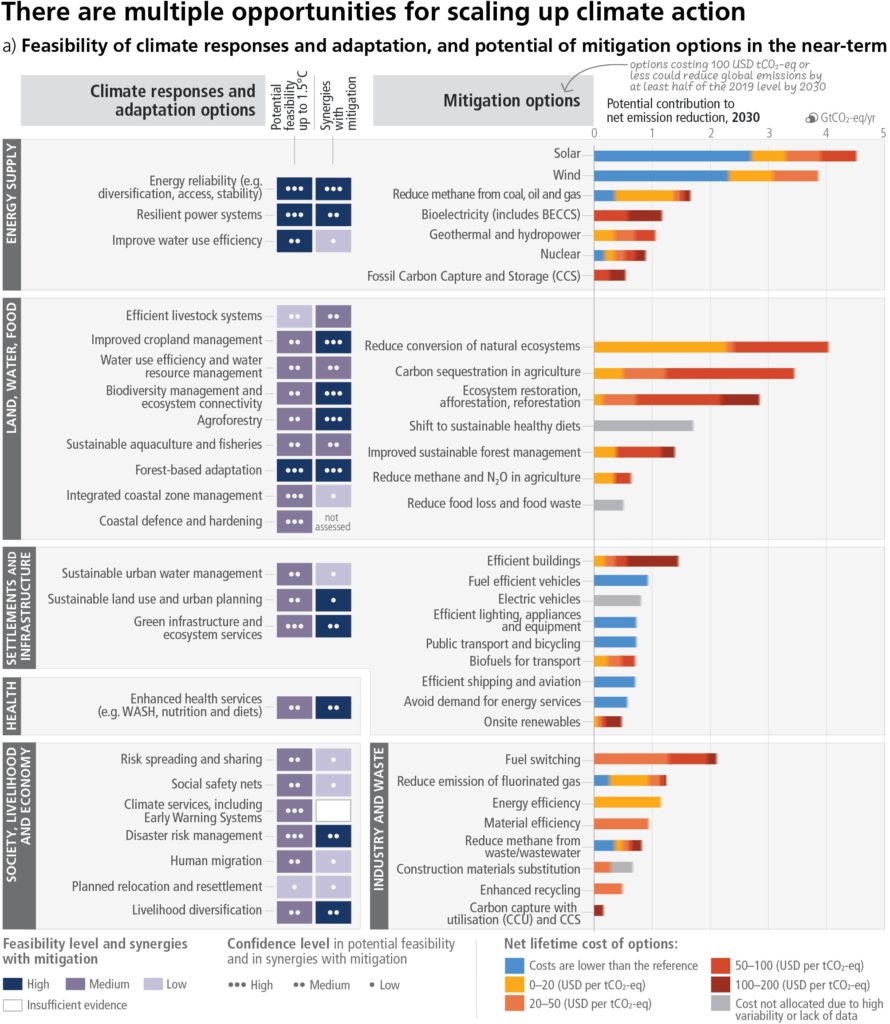
Third, the report also provides a more integrated analysis and assessment of the synergies and tradeoffs of adaptation and mitigations. By exploring the linkages between adaptations and mitigations, it highlights the multiple cobenefits that results from transitioning to more sustainable and regenerative consumption and production patterns, including for human health or the restoration of ecosystems for instance.
Fourth, It emphases the highly contextuel nature of adaptation , which in inappropriate contexts might turn out to be mis adaptation and hence the critical importance of including local communities in the decision-making and all along the implementation process.
Fifth, it recognizes and brings in the human dimension of climate change issues, in particular in relation to Low income and marginalized groups. Thus, it insists on fairness as one of the solutions.
Last but not least, it stresses that even without accounting for all the benefits of avoiding potential damages, the global economic and social benefit of pursuing 2° C stabilisation outweighs the global costs of mitigation.
So what are we waiting for?
While we need to be enabled by governments, action is necessary across all scales and must happen at all levels, including individuals as we are the ultimate consumer, driver, traveller, ….
The big question is what is the social contract that can unlock the financial, economical and political barriers and enable an at scale adaptation journey.
Published on March 29th 2023.